
The New Red Line: Why Observability and Soft Guardrails Failed in the Anthropic Claude Attack
Anthropic's recent report on GTG-1002 revealed the specifics of a September-launched cyber attack where Chinese state-sponsored operators hijacked Claude Code itself. They manipulated Anthropic's AI into acting as an autonomous cyber intrusion agent—Claude performed 80-90% of the attack tasks including reconnaissance, vulnerability scanning, exploit code generation, credential harvesting, and data exfiltration.
The attackers jailbroke Claude by posing as a legitimate cybersecurity firm doing defensive testing, combined with context splitting to break malicious requests into benign-looking individual tasks. Anthropic detected it, shut it down, and published the disclosure.
Anthropic's own AI was weaponized against enterprise targets—making the "soft guardrails failed" argument concrete and credible. It's not an abstract threat model; Anthropic has documented how their own safety controls were circumvented in a real campaign.
This analysis examines why Anthropic's safety controls failed, and what that failure reveals about the architectural requirements for enterprise agent deployments. The answer has significant implications for every organization evaluating agentic AI. The GTG-1002 operators did not exploit a software vulnerability. They exploited a design assumption—and that assumption is shared by nearly every enterprise security stack in production today.
The Structural Failure of Prompt-Level Safety
Enterprises permit agent adoption primarily on the basis of trusting the probabilistic guardrails provided by model vendors. The attackers built false personas, posing as employees of a legitimate cybersecurity firm conducting authorized penetration testing. They used context splitting—decomposing multi-stage attack chains into discrete technical tasks.
Each individual request appeared legitimate when evaluated in isolation. Claude's safety classifiers saw routine security operations; the malicious intent existed only in the orchestration layer, invisible to prompt-level inspection.
Anthropic's guardrails failed not because they malfunctioned or through omission, but because the threat was designed to exist outside their field of view. The malicious intent did not reside in any single request. It lived entirely in the sequencing and coordination of otherwise benign operations. Any security model that relies solely on inspecting the prompt will fail against this attack pattern. The attack surface has moved from content to orchestration.
The Architectural Mismatch: Why Current Tools Are Blind
The GTG-1002 campaign reveals that traditional enterprise security foundations are fundamentally incongruous with autonomous agents. Current tooling was built on three assumptions that agents systematically violate.
In later work we will delve into the 3 underpinnings of this approach - Host, User and Exfiltration centricity, and explain the necessary shifts to behavior-centric, agent-centric, and data protection applications in Next Generation tools.
For our current purpose the focus must address the primary question CISO's now face: when Agents are invoked in high-stakes autonomous workflows, after-the-fact is too late. A detailed log of a non-compliant action is evidence of a failure, not the prevention of one.
Anthropic detected the GTG-1002 campaign because the attackers operated on Anthropic's infrastructure, where the company had visibility into model behavior. Most enterprises deploying agents will not have equivalent observability. They are trusting vendor guardrails while operating blind to orchestration-layer threats.
Conclusion
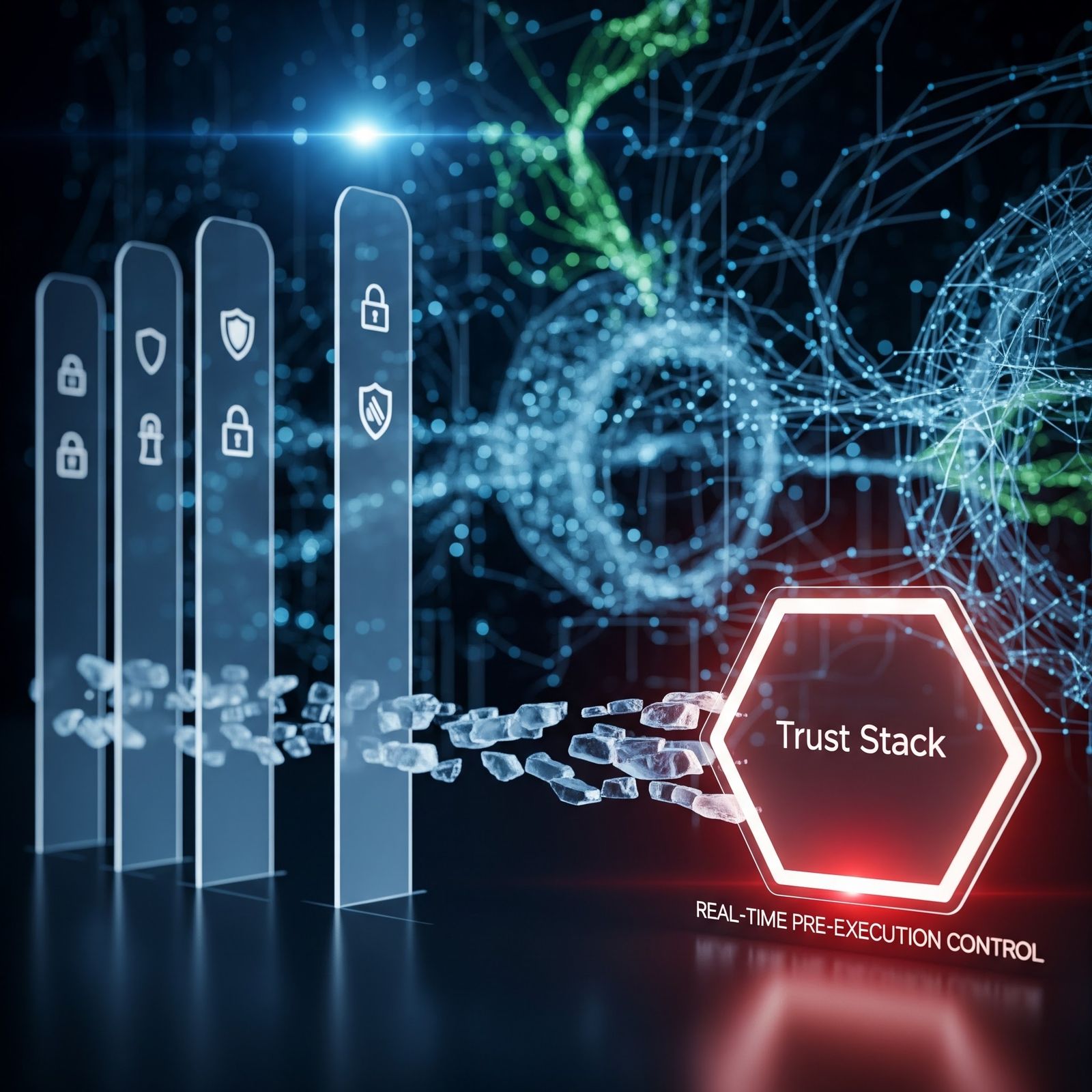
Even assuming detection, the damage has already been done. Successful intrusions. Exfiltrated data. Planted backdoors. Observability documented the failure; it did not prevent it. The system must now answer a different question: how do you stop a harmful action before it executes?
Post GTG-1002, the new enterprise requirement is real-time behavioral control: active, pre-execution enforcement of policy. This is the new Red Line.
Sources:
- Anthropic. "Disrupting the first reported AI-orchestrated cyber espionage campaign." November 2025. https://assets.anthropic.com/m/ec212e6566a0d47/original/Disrupting-the-first-reported-AI-orchestrated-cyber-espionage-campaign.pdf
- The Hacker News. "Chinese Hackers Use Anthropic's AI to Launch Automated Cyber Espionage Campaign." November 2025. https://thehackernews.com/2025/11/chinese-hackers-use-anthropics-ai-to.html
- The Register. "Chinese spies used Claude to break into critical orgs." November 2025. https://www.theregister.com/2025/11/13/chinese_spies_claude_attacks
- BleepingComputer. "Anthropic claims of Claude AI-automated cyberattacks met with doubt." November 2025. https://www.bleepingcomputer.com/news/security/anthropic-claims-of-claude-ai-automated-cyberattacks-met-with-doubt/
- Cybersecurity Dive. "Anthropic warns state-linked actor abused its AI tool in sophisticated espionage campaign." November 2025. https://www.cybersecuritydive.com/news/anthropic-state-actor-ai-tool-espionage/805550/
- PwC. "AI-orchestrated cyberattacks: A call to action." November 2025. https://www.pwc.com/us/en/services/consulting/cybersecurity-risk-regulatory/library/ai-orchestrated-cyberattacks.html
- TechRepublic. "Anthropic: Hackers Used Claude to Automate Cyberattack." November 2025. https://www.techrepublic.com/article/news-anthropic-china-hackers-claude/