
AI in Cybersecurity: The Defining Force Shaping Offense and Defense
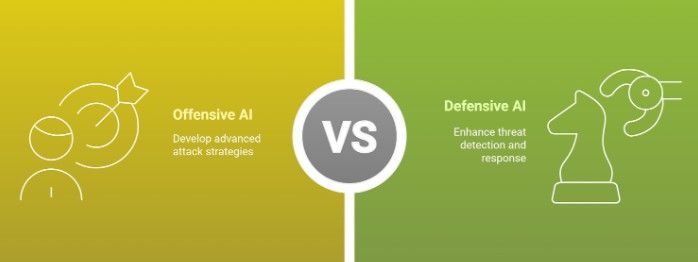
Artificial intelligence has become the defining force in cybersecurity walking into 2025 – a catalyst for both unprecedented threats and innovative defenses. We are witnessing an AI-driven cyber arms race in which each new algorithm can tilt the balance between attacker and defender.
This is the first in a series that frames how AI now permeates every facet of cyber offense and defense, and how CIO's & CISO's are charting strategy for 2025 and beyond.
Dual-Use AI: A Double-Edged Sword
AI is an acknowledged double-edged sword. On one side, nation states, cybercriminals, and other threat actors are weaponizing generative AI to supercharge their attacks. For instance:
- Threat actors can generate flawless phishing lures en masse, create deepfake audio/video to impersonate trusted leaders, and even discover or exploit vulnerabilities at machine speed
- Hackers now craft spear-phishing emails with impeccable grammar and branding in any language, and can find exploits ten times faster than before
- In 2024 scammers began using AI deepfakes to trick C level executives into transferring multi-million dollar in erroneous transactions, $25M USD in the largest haul. Attackers are scaling social engineering and malware creation like never before
The Defensive Line
- The integration of generative AI into cyber capabilities is becoming increasingly common, with 36% of organizations including AI and generative AI in their cybersecurity budget, as reported in the fourth edition of Deloitte's Global Future of Cyber survey.
- SOC teams have started to deploy AI “copilots” and autonomous SOC tools to sift through large data streams, detect anomalies, and respond at machine speed. Nearly nine in ten cybersecurity professionals plan to boost their use of AI in the next year - fighting fire with fire
- From AI-driven threat hunting to automated incident triage, these tools augment human analysts and help tame the deluge of alerts. Example - Microsoft’s Security Copilot uses GPT-4 and specialized agents to automate tasks like phishing alert triage and vulnerability remediation.
- CrowdStrike, Palo Alto and SentinelOne all have compelling AI powered defense tools in the market as well, which will be discussed in later reviews, as well as leading new market entrants in this space
This dual-use dynamic has created an escalating cyber arms race. Each side is rapidly upping the ante: as AI lowers the cost and skill barrier for sophisticated attacks, organizations must respond in kind by automating their defenses. While industry leaders are debating which side will gain the upper hand– it is crystal clear that standing still is not an option. Thus, this series of introductory analysis.
2025 Playbook for CIO's/CISO's
It is already acknowledged that AI in cybersecurity is now a strategic priority demanding & receiving Board-level attention. Already, nearly three-quarters of enterprises plan to increase cybersecurity investments to address AI-driven threats and opportunities. However, note that many organizations are forging ahead without proper oversight – 34% have no policy for governing generative AI use.
CIO's & CISO's must balance bold adoption with prudent risk management. An initial overview of current enterprise strategy involves 4 domains:
- AI Governance: Do we have a framework to ensure the safe, ethical use of AI in our security operations?
- Defensive Readiness: Are we prepared to detect and respond to AI-augmented attacks like deepfakes or AI-generated malware?
- Human Talent: How are we retraining and upskilling our security team as we automate more tasks? Are we avoiding “AI tunnel vision” by maintaining core human expertise?
- Vendor Ecosystem: How do we evaluate “AI-powered” security products and integrate them effectively? (Many CIOs are turning to vendors for Agentic AI solutions to help fill skill gaps)
What’s Next in the AI & Cybersecurity
This is the first in a five-part series on AI’s impact in cybersecurity. Coming up we will explore:
- Threat Tech - AI in the Kill Chain: How AI is used at each stage of the cyber kill chain – from reconnaissance and initial access to exploitation and exfiltration – and how defenders can disrupt AI-augmented attacks at each step.
- Defensive Tech - AI in the SOC: The next-generation SOC powered by AI co-pilots and automation, covering AI-assisted incident response, the evolving role of human analysts, and ways to maintain trust in AI’s decisions.
- Executive AI Risk Governance: Managing AI-related cyber risks at the executive level, including regulatory and ethical considerations, and how to educate the board on overseeing AI in security.
- AI and the Vendor Ecosystem: Navigating the marketplace of AI-centric security solutions – how to assess vendors’ AI capabilities, ensure their tools work together, and cut through hype to strengthen defenses.
Together, these reviews will help C Level Executives facing these front line challenges craft a proactive roadmap for harnessing AI’s potential safely – keeping pace and preferably outrunning & gunning the adversaries who are already upgrading their arsenal.
If well executed, this will allow defensive leadership to turn the new threat landscape into an opportunity for resilience and strategic advantage.
Sources:
“Microsoft Announces New Agentic AI Tools for Security Copilot.” The Journal, Mar 31 2025
“Microsoft Unveils Microsoft Security Copilot Agents and New Protections for AI.” Microsoft Security Blog, Mar 24 2025
Charlotte AI Detection Triage Saves 40+ Hours Weekly. CrowdStrike Blog, Feb 13 2025
Press Release: CrowdStrike Delivers Next Breakthrough in AI-Powered Cybersecurity with Charlotte AI Detection Triage. CrowdStrike, Feb 13 2025
“Finance Worker Pays $25 Million After Video Call with Deepfake CFO.” CNN, Feb 4 2024
https://www.cnn.com/2024/02/04/asia/deepfake-cfo-scam-hong-kong-intl-hnk/index.html
Global Cybersecurity Outlook 2025. World Economic Forum, Jan 2025
https://reports.weforum.org/docs/WEF_Global_Cybersecurity_Outlook_2025.pdf
“Companies Aren’t Prepared for AI-Powered Bot Attacks.” Axios, Nov 19 2024
https://www.axios.com/2024/11/19/ai-cyberattacks-bots-arkose-labs-survey
“Survey Findings: AI Cyber-Threats Are a Reality—People Are Acting Now.” Darktrace Blog, Mar 2025
Secure Employee Access in the Age of AI (Report). Microsoft, 2025
Global Cybersecurity AI Adoption & Risk Survey 2025. Business Wire release, Mar 17 2025